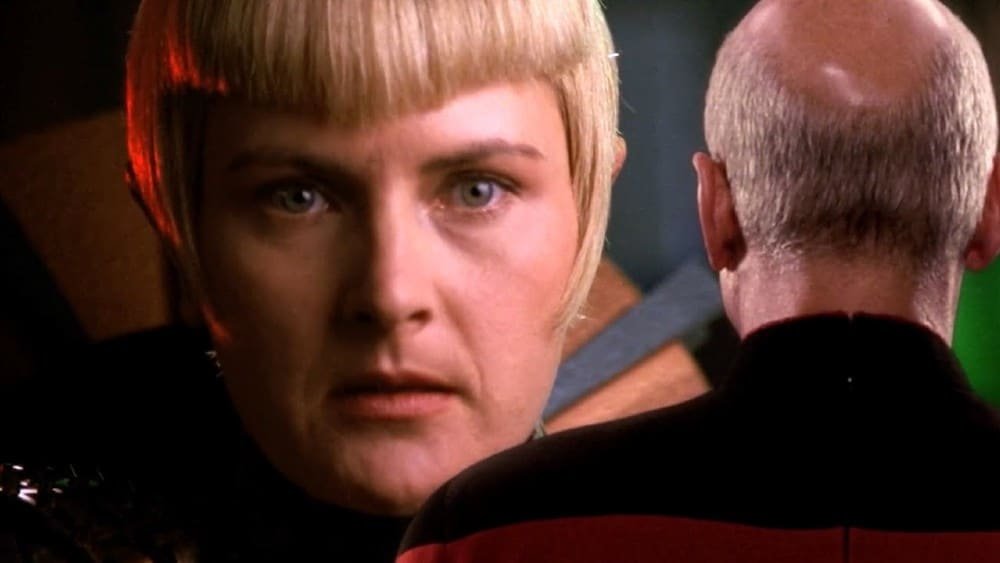
The hum of the warp core, the serene glow of the main viewscreen, the quiet dignity of a captain in command – these are the hallmarks of Star Trek: The Next Generation. Yet, what truly etched the USS Enterprise-D and its crew into the hearts of millions wasn't just groundbreaking sci-fi or philosophical quandaries. It was the rich tapestry of Star Trek: TNG Character Journeys & Development, a testament to how well-crafted narratives can transform a cast into a beloved family. From the stoic captain who learned to embrace vulnerability to the android who yearned for a single human tear, TNG offered an unprecedented look into the evolving souls navigating humanity's future.
This wasn't merely a show about space exploration; it was a profound exploration of identity, growth, and the human (and alien) condition, delivered through characters we watched mature, stumble, and triumph over seven remarkable seasons.
At a Glance: The Enduring Legacy of TNG's Crew
- Deep, Evolving Arcs: Characters like Picard, Data, and Worf underwent significant personal transformations, challenging their core beliefs and identities.
- Relatable Human Experience: Despite the futuristic setting, the crew grappled with universal themes: love, loss, ambition, belonging, and the search for purpose.
- Ensemble Strength: While individual journeys were powerful, the interconnected relationships and mutual support defined the crew's 'family' dynamic.
- Pioneering Sci-Fi: TNG used character development to explore complex ethical, philosophical, and social issues, pushing the boundaries of television storytelling.
- Lasting Impact: The character arcs resonated far beyond the series, influencing subsequent Star Trek shows and pop culture.
The Enterprise-D's Beating Heart: Why Character Journeys Matter So Much
When Star Trek: The Next Generation first launched in 1987, it faced the monumental task of succeeding an icon. Gene Roddenberry's vision for a more evolved, largely conflict-free 24th century presented unique storytelling challenges, particularly in its first season. Early episodes sometimes struggled with a "revolving door" of writers and a strict adherence to Roddenberry's ideals, occasionally leading to flatter character portrayals.
However, as Michael Piller took the reins as head writer and executive producer in later seasons, the series blossomed. He understood that a future without interpersonal conflict didn't mean a future without internal conflict. It meant delving deeper into personal struggles, ethical dilemmas, and the individual quests for understanding and self-improvement. This shift allowed the characters to truly breathe, revealing layers of complexity that made them not just Starfleet officers, but profoundly relatable individuals. The audience wasn't just watching adventures; they were invited to witness personal transformations, often through the lens of exploration and first contact. To truly appreciate the scope of their adventures and personal growth, it’s worth taking a deeper dive into the series itself; you can Explore Star Next Generation Episodes to see these arcs unfold firsthand.
Captain Jean-Luc Picard: The Evolution of a Diplomatic Leader
No character embodies TNG's commitment to growth quite like Captain Jean-Luc Picard, brought to life with gravitas and nuance by Patrick Stewart. Initially presented as a formidable, intellectual, and somewhat austere commander, Picard was the antithesis of the swashbuckling Kirk. He preferred diplomacy and philosophical debate over phaser fire, valuing Shakespeare and a good cup of Earl Grey tea. His command style was marked by reason, empathy, and inspiring speeches that often swayed the fate of civilizations.
Yet, Picard's journey was far from static. He grappled with profound personal traumas, from the Borg assimilation in "The Best of Both Worlds" to the loss of his family. These experiences chipped away at his stoicism, revealing a deeply compassionate and sometimes vulnerable man. He learned to trust his crew more profoundly, to open himself to unexpected friendships, and even to embrace moments of levity.
Mini-Case: "The Inner Light"
Perhaps Picard's most defining character episode, "The Inner Light," forced him to live an entire lifetime as Kamin, a man on a dying planet. This experience, compressed into minutes for his real-world consciousness, fundamentally altered him. It taught him about simple joys, family, and the preciousness of life, adding a layer of poignant humanity to his previously reserved persona. This wasn't just a mission; it was a spiritual rebirth that resonated through every subsequent decision he made. By the series finale, "All Good Things...", his interactions with Q highlighted humanity's potential for growth, reflecting his own profound journey.
Commander William T. Riker: From Brash to Reliable
Jonathan Frakes' portrayal of Commander William T. Riker provided a crucial counterpoint to Picard's formality. As the First Officer, Riker was often the one leading away missions, bringing a more adventurous, sometimes impulsive, energy to the bridge. In the early seasons, he was the archetypal dashing Starfleet officer, a confident charmer known for his confident swagger and readiness for a fight.
Riker's development, however, was about maturity and the gradual acceptance of responsibility. He was frequently offered promotions to command his own starship, but consistently turned them down, valuing his position on the Enterprise-D and his relationships with its crew. This decision, initially a sign of reluctance, evolved into a conscious choice to remain part of a family he cherished. His relationship with Counselor Deanna Troi was a slow burn across the series, evolving from past lovers to deep companions, culminating in their eventual marriage. Riker's arc showed that true strength isn't just about taking command, but understanding where you're truly needed and finding contentment in that role.
Lt. Commander Data: Searching for Humanity in a Positronic Brain
Brent Spiner's Lt. Commander Data is arguably the heart of TNG's philosophical explorations. An android with a positronic brain, Data was in a constant, often poignant, quest to understand and experience humanity. He served as a focal point for countless episodes that asked: what does it truly mean to be human? Is it emotions, creativity, love, or even dreams?
Data's journey was a series of scientific experiments and personal observations. He attempted to understand humor, developed friendships (particularly with Geordi La Forge), adopted a cat named Spot, and even built his own android daughter, Lal. Each attempt, whether successful or a hilarious failure, brought him closer to his elusive goal. His interactions often served as a mirror for the human characters, forcing them to articulate and confront their own nature. His emotional chip, though fraught with peril, represented his ultimate desire to bridge the gap between logic and feeling.
Mini-Case: "The Offspring"
Data's creation of Lal, his "child," was a powerful exploration of parenthood, creation, and the bittersweet nature of life and loss. Lal’s brief but impactful existence, and Data's profound grief at her loss, demonstrated that even without organic emotions, his capacity for love and sorrow was deeply felt, proving his growing humanity in a way no logic could deny. This episode, among many others, showcased why his quest was so compelling, offering profound insights into the human condition. To see more episodes like this that exemplify the unique journeys of the crew, Explore Star Next Generation Episodes.
Lt. Commander Geordi La Forge: Engineering Empathy and Friendship
LeVar Burton's Lt. Commander Geordi La Forge, the Enterprise's Chief Engineer, offered a different kind of insight into the future of humanity. Blind since birth, Geordi perceived the electromagnetic spectrum through a sophisticated VISOR, making him a unique visual metaphor for expanded perception. A brilliant and persistent engineer, he was consistently at the forefront of solving the ship's most complex technical dilemmas.
Geordi's character arc wasn't about a dramatic personal transformation in the same vein as Picard or Data, but rather a steady deepening of his interpersonal connections and professional confidence. His most significant development came through his steadfast friendship with Data. Their bond was one of mutual respect and genuine affection, with Geordi often acting as Data's confidant and guide in the intricacies of human behavior. He embodied the Starfleet ideal of using intelligence and compassion not just for technical problem-solving, but for nurturing human relationships.
Lt. Worf: Navigating Honor and Identity
Michael Dorn's Lt. Worf was a groundbreaking character: the first Klingon officer in Starfleet. His journey was a constant struggle to reconcile his warrior heritage with his Starfleet duties and the more diplomatic values of the Federation. Worf was a man of honor, loyalty, and fierce pride, often clashing with human sensibilities.
His arc explored Klingon culture in unprecedented depth, introducing his family, his son Alexander, and the intricate politics of the Klingon Empire, including the Duras sisters. Worf often felt like an outsider, straddling two worlds but never fully belonging to either. He wrestled with concepts of justice, revenge, and the rigid code of honor that sometimes ran contrary to Starfleet regulations. His character gained even significant development in Star Trek: Deep Space Nine after TNG concluded, making him the most appearing regular cast member in Star Trek history. His presence alone challenged the crew to broaden their understanding of different cultures, making the Enterprise-D a true microcosm of the Federation.
Dr. Beverly Crusher: Compassion, Intellect, and Ethical Dilemmas
Dr. Beverly Crusher, played by Gates McFadden, served as the Enterprise's Chief Medical Officer, a role she inhabited with intelligence, compassion, and a strong moral compass. She was not just a skilled physician but also a scientist and a confidante, often pushing back against Starfleet rules when patient care or ethical considerations demanded it.
Her character development focused on demonstrating the human heart of Starfleet medicine. She was a single mother, a grieving widow (her husband, Jack Crusher, was a dear friend of Picard's), and a woman fiercely protective of her crew. Her brief departure in Season 2 (replaced by Dr. Pulaski) highlighted her importance, and her return in Season 3 was widely celebrated. Dr. Crusher often faced complex medical and ethical dilemmas, forcing her to make difficult choices that tested her resolve but always reaffirmed her deep empathy. Her growth was subtle but consistent, showcasing a woman who matured into an even more confident and authoritative leader within her field.
Counselor Deanna Troi: The Empath's Growth and Leadership
Marina Sirtis's portrayal of Counselor Deanna Troi was initially characterized by her empathic abilities, allowing her to read emotions. While sometimes underutilized in early seasons, her character truly blossomed as she developed beyond simply sensing feelings. Her journey was about integrating her Betazoid sensitivity with her human logic, evolving into a more assertive and tactically aware officer.
Troi's most significant relationship, of course, was with Commander Riker. Their complicated history provided a constant thread of personal connection and growth throughout the series. Over time, she took on more command responsibilities, demonstrating her capacity for leadership beyond her counseling duties. She earned a promotion to Commander and even briefly took the helm, proving her multifaceted contributions to the crew's success. This development challenged initial perceptions, showing that empathy could be a powerful tool not just for therapy, but for tactical decision-making and command. Her personal and professional maturation are evident when you Explore Star Next Generation Episodes and trace her path through various challenges.
Wesley Crusher: Prodigy's Path Beyond Starfleet
Wil Wheaton's Wesley Crusher, Dr. Beverly Crusher's brilliant son, had a unique and often controversial journey. Introduced as a boy genius, he quickly rose through the ranks, becoming an acting Ensign despite his youth. His character represented the potential of a new generation within Starfleet, but also the challenges of growing up in the shadow of remarkable parents and mentors.
Wesley's development wasn't towards a traditional Starfleet career. Guided by the enigmatic Traveler, he eventually left Starfleet to explore space and time in a way few could imagine. This unconventional path allowed the character to break free from the typical Starfleet mold, embracing a destiny that was entirely his own. His departure symbolized a different kind of growth – one that acknowledges that the boldest journeys aren't always within the confines of established institutions.
Tasha Yar: A Brief, Impactful Legacy
Denise Crosby's Lt. Tasha Yar served as the Security Chief in the first season. A skilled combatant with a tough background, Tasha brought a raw, street-smart edge to the bridge crew. Her character offered a glimpse into a harder past, contrasting with the utopian ideals of the 24th century.
Tragically, Tasha was killed in Season 1's "Skin of Evil," a shock to viewers and a pivotal moment for the crew. While her time was brief, her death served as a stark reminder of the dangers of deep space and the personal cost of exploration, leaving a lasting impact on her shipmates, particularly Data. Crosby later returned in other capacities, most notably in "Yesterday's Enterprise," showcasing alternate timelines and the enduring "what if" of Tasha's potential. Her short but memorable arc demonstrated that even a character with limited screen time could leave a profound mark on the overall narrative.
The Ensemble Effect: How Interplay Forged a Family
While individual arcs were compelling, the true genius of TNG's character development lay in the dynamic interplay between the entire ensemble. The Enterprise-D crew wasn't just a collection of talented individuals; they were a found family, bound by shared experiences, mutual respect, and a deep sense of loyalty.
The show masterfully utilized recurring characters to challenge and develop the main cast. The omnipotent being Q, introduced in the pilot "Encounter at Farpoint" and returning throughout the series, served as a cosmic antagonist, often forcing Picard and humanity to confront their limitations and potential. Deanna Troi's larger-than-life Betazoid mother, Lwaxana Troi (played by Majel Barrett Roddenberry), often pushed boundaries and elicited unexpected reactions from Picard and the crew, adding humor and warmth.
Whether facing down the formidable Borg, negotiating with the profit-driven Ferengi, or navigating the complexities of Klingon culture, the crew relied on each other. Their shared experiences forged unbreakable bonds, making their triumphs more joyous and their losses more keenly felt. This collaborative character development, where each member's growth influenced the others, created a rich, believable, and utterly endearing fictional universe.
Beyond the Viewscreen: The Lasting Impact of TNG's Crew
Star Trek: The Next Generation garnered 19 Emmy Awards, two Hugo Awards, and a Peabody, consistently ranking among the top hour-long dramas. Critics lauded Patrick Stewart's performance and the series' character development as key to its success. But the crew's journeys didn't end with the series finale, "All Good Things..."
The success of TNG directly led to Star Trek: Deep Space Nine and four feature films starring the TNG cast: Generations, First Contact, Insurrection, and Nemesis. Moreover, characters like Worf (Michael Dorn) continued their stories in Deep Space Nine and Star Trek: Picard, proving the enduring appeal and development potential of these beloved figures. The series' comprehensive 1080p high-definition remastering for Blu-ray, a monumental effort, speaks to the dedication to preserving its legacy. TNG remains widely available on streaming services and in syndication, allowing new generations to discover and fall in love with these remarkable characters and their timeless voyages.
The depth of these characters, their flaws, triumphs, and the unwavering dedication to exploration and understanding, ensured that Star Trek: TNG Character Journeys & Development set a new bar for science fiction television. It proved that even in a future where humanity had overcome many of its baser instincts, the individual quest for meaning and connection remained profoundly relevant.
Charting Your Own Course: The Enduring Appeal of TNG's Character Arcs
The lasting appeal of Star Trek: The Next Generation lies not just in its futuristic tech or grand adventures, but in its unwavering focus on the human (and sentient) condition. The journeys of Picard, Data, Worf, and the entire Enterprise-D crew resonate because they mirror our own struggles, aspirations, and continuous evolution.
They remind us that growth is a lifelong process, that understanding comes from empathy, and that even in a highly advanced society, the most compelling narratives are those of personal transformation. As you revisit the voyages of the Enterprise-D, take a moment to reflect on how far these characters came, and perhaps, how their journeys might inspire your own. After all, boldly going where no one has gone before isn't just about exploring space; it's about exploring the depths of ourselves. For a comprehensive look at the episodes that defined these iconic characters, Explore Star Next Generation Episodes and relive the moments that shaped the beloved crew.