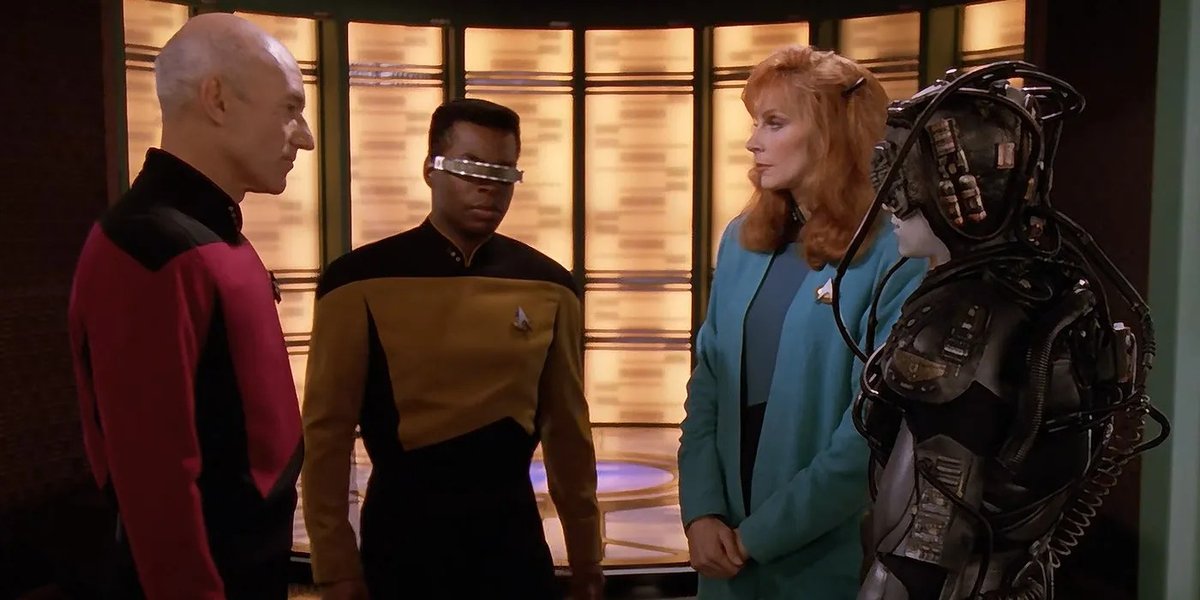
Ah, Star Trek: The Next Generation. Just the name conjures images of starry nebulae, philosophical quandaries, and Captain Picard's iconic "Make it so!" It’s a show that transcended mere science fiction, becoming a cultural touchstone that explored the very best — and sometimes the darkest — of humanity’s potential. But with 178 episodes spanning seven seasons, how do you even begin to sift through them to find the true masterpieces? That’s where the perennial debate over Rankings & Best of Star Trek: TNG Episodes comes in.
You're not alone in wanting to revisit the highlights, introduce a friend to the series, or simply settle a late-night discussion about which episode truly reigns supreme. While "best" is always a deeply personal verdict, there's a fascinating consensus that emerges when you look at how fans, critics, and even the cast themselves have weighed in over the decades. We’ve delved deep into the collective consciousness of the Trek community to bring you the definitive guide to TNG’s most beloved, impactful, and downright brilliant entries.
At a Glance: Why These Episodes Endure
- Deep Character Arcs: The best TNG episodes aren't just about space battles; they delve into the psychology and growth of Picard, Data, Worf, and the entire Enterprise crew.
- Philosophical Muscle: They tackle complex ethical dilemmas, questions of sentience, morality, and what it means to be human, often without easy answers.
- Groundbreaking Sci-Fi: From time loops to Borg assimilation, these episodes pushed the boundaries of what television science fiction could achieve.
- Emotional Resonance: Many of the highest-ranked episodes deliver profound emotional impacts, leaving a lasting impression long after the credits roll.
- Rewatchability: They hold up to repeated viewings, revealing new layers and nuances with each watch.
The Quest for Consensus: How We Determine "Best"
Pinpointing the absolute "best" is a challenge, as every Trekkie has a personal connection to certain stories or characters. However, a significant body of fan polls, critical analyses, and community-driven rankings exists. To cut through the noise, we've focused on episodes that consistently appear at the top across numerous aggregated lists. Think of it as a meta-analysis, where the collective voice of thousands of discerning viewers helps illuminate the true gems.
For instance, sites like Listobsession.com have meticulously averaged data from over a dozen "best of" lists, providing a robust, fan-derived ranking of nearly All Star Next Generation episodes. Similarly, platforms like Ranker.com gather thousands of direct fan votes, offering real-time insights into which episodes resonate most powerfully. This comprehensive approach allows us to confidently highlight the episodes that have earned their legendary status.
These aren't just arbitrary picks; they represent episodes that sparked conversations, won awards, and, most importantly, stuck with audiences through the years. They are the stories that define Star Trek: The Next Generation's enduring legacy.
The Pinnacle of Perfection: TNG's Undisputed Top Episodes
When the votes are tallied and the consensus emerges, a few episodes consistently rise to the very top. These are the ones often cited as masterclasses in storytelling, character development, and philosophical inquiry.
1. "The Best of Both Worlds" (Parts I & II)
- Original Air Date (Part I): June 18, 1990 (Season 3 Finale)
- Original Air Date (Part II): September 24, 1990 (Season 4 Premiere)
- Why it's essential: No other TNG episode (or multi-part arc) quite captured the existential dread and high stakes like "The Best of Both Worlds." The Borg, a relentless collective bent on assimilation, arrive on the scene, and in a shocking twist, they capture and assimilate Captain Picard himself, transforming him into Locutus.
This two-part saga redefined what Star Trek could be. It wasn't just about good guys versus bad guys; it was about the horrific loss of identity, the ultimate violation, and the impossible choice faced by Commander Riker – destroy a Borg ship, even if it means killing his former captain. The cliffhanger ending of Part I, with Riker giving the order to fire on Locutus, is arguably one of the greatest in television history. Part II didn't just resolve the crisis; it explored the profound emotional and psychological scars left on Picard and the crew. It's a masterclass in tension, character development, and galactic-level threat.
2. "The Inner Light"
- Original Air Date: June 1, 1992 (Season 5)
- Why it's essential: Often cited as the most emotionally resonant episode in TNG's history, "The Inner Light" is a beautifully crafted, poignant exploration of memory, identity, and loss. Picard is struck by an alien probe that renders him unconscious, implanting him with an entire lifetime of memories on a dying planet called Kataan.
In what feels like mere minutes for the Enterprise crew, Picard lives decades as a man named Kamin, building a family, learning to play the Ressikan flute, and watching his civilization slowly succumb to its sun's demise. The brilliance lies in its simplicity and profound emotional depth. Picard doesn't just observe; he lives another life, experiencing joy, love, sorrow, and ultimately, the heartbreaking end of a culture. When he awakens, the probe imparts one final gift: Kamin's flute, a tangible reminder of a lifetime that was both real and yet, never truly happened. It’s a testament to Patrick Stewart's acting and the show's ability to tell a deeply human story within a cosmic setting.
3. "Yesterday's Enterprise"
- Original Air Date: February 19, 1990 (Season 3)
- Why it's essential: A gripping, high-stakes time-travel narrative, "Yesterday's Enterprise" delivers both thrilling action and profound moral dilemmas. A temporal rift brings the USS Enterprise-C, a predecessor ship, forward in time, inadvertently altering the timeline into a brutal, endless war with the Klingons.
The episode masterfully builds tension as the crew grapples with the new, grim reality and the chilling realization that their current existence is a mistake. The return of Denise Crosby as Tasha Yar, who tragically died in Season 1, adds an incredible layer of emotional weight. Guinan, with her unique temporal sensitivity, urges Picard to send the Enterprise-C back to its doom, restoring the proper timeline. This means sacrificing hundreds of lives, including Yar's, for the sake of billions. It’s a bold, character-driven story that perfectly encapsulates the show's willingness to explore heavy themes and make difficult choices.
4. "The Measure of a Man"
- Original Air Date: February 13, 1989 (Season 2)
- Why it's essential: This episode is a cornerstone of Data’s character arc and a powerful examination of civil rights and what defines sentience. When a Starfleet scientist, Commander Bruce Maddox, attempts to disassemble Data to study him and mass-produce more androids, Data refuses. Starfleet then convenes a legal hearing to determine if Data is sentient and therefore has the right to refuse, or if he is merely property.
"The Measure of a Man" is essentially a courtroom drama, but one with galactic implications. Captain Picard steps forward to defend Data’s rights, arguing passionately about artificial intelligence, consciousness, and the moral imperative not to treat an intelligent being as a mere instrument. It's a thoughtful, engaging episode that grapples with profound philosophical questions that remain relevant today. It solidified Data as one of Star Trek's most beloved and complex characters.
5. "Cause and Effect"
- Original Air Date: March 23, 1992 (Season 5)
- Why it's essential: "Cause and Effect" is a dazzling display of science fiction ingenuity, a mind-bending temporal loop episode that keeps viewers on the edge of their seats. The Enterprise finds itself repeatedly caught in a causality loop, leading to its destruction in a collision with another starship. Each loop gives the crew a few fragmented clues before the cycle resets.
The episode cleverly uses repetitive scenes, subtle changes, and a growing sense of déjà vu among the crew to build suspense. It's a masterclass in narrative structure, demonstrating how small details in one iteration can have catastrophic (or salvific) consequences in the next. The crew must piece together the puzzle of their doom before they run out of "lives." It's a unique, thrilling, and incredibly well-executed example of high-concept sci-fi, demonstrating TNG's willingness to play with non-linear storytelling.
Beyond the A-List: More Stellar Episodes to Cherish
While the top five are frequently lauded, TNG boasts a deep bench of exceptional episodes. These often appear just a hair below the very top, offering diverse storytelling, iconic moments, and lasting impact. They exemplify the breadth and depth of the series.
Episodes of Moral Quandary & Social Commentary
These episodes often put the crew in ethically compromising positions or used alien cultures to reflect on human society.
- "Darmok" (Season 5): A brilliant episode focused entirely on communication, where Picard must learn to understand an alien captain whose language is based solely on metaphor. It's a powerful statement on empathy and connection across cultural divides.
- "The Offspring" (Season 3): Data creates an android daughter, Lal, leading to fascinating questions about artificial life, parenthood, and the rights of a new being. A deeply emotional and thought-provoking story.
- "Chain of Command" (Parts I & II) (Season 6): Picard is captured and brutally tortured by the Cardassians, pushing him to his physical and psychological limits. A raw and intense examination of resilience, ideology, and the true cost of conflict.
- "Who Watches The Watchers" (Season 2): The Prime Directive is put to the ultimate test when a pre-warp civilization witnesses a Starfleet accident and begins to worship the Enterprise crew as gods. A classic example of TNG exploring the ethical dilemmas of space exploration.
Character-Defining Moments & Emotional Depth
These episodes shine a spotlight on individual crew members, revealing new facets of their personalities and pasts.
- "Family" (Season 4): Often considered an informal Part III to "The Best of Both Worlds," this episode shows Picard returning to his family vineyard in France, dealing with the trauma of his assimilation. It's a quiet, introspective masterpiece that highlights the human cost of the Enterprise’s adventures.
- "Yesterday's Enterprise" (Season 3): (Yes, it’s already on the top list, but it also belongs here for its profound impact on Tasha Yar and her choice.)
- "Tapestry" (Season 6): A Q-centric episode where Picard gets a chance to revisit his past and change a critical mistake. It's a fantastic character study, revealing how his youthful recklessness ultimately forged the captain we know.
- "Sarek" (Season 3): The legendary Vulcan ambassador Sarek (Spock's father) comes aboard, revealing a rare emotional breakdown that deeply affects Picard, demonstrating the profound bond between the two characters.
Action, Intrigue & High Stakes
Sometimes, TNG just delivered pulse-pounding, edge-of-your-seat thrills.
- "Q Who" (Season 2): Q introduces the Enterprise to the Borg for the very first time, demonstrating their terrifying power and setting the stage for "The Best of Both Worlds." A pivotal episode that changes the stakes for the entire Federation.
- "Relics" (Season 6): The Enterprise discovers Scotty (from the original series) alive after decades in a transporter buffer. A delightful and poignant crossover that honors the past while embracing the future.
- "Conspiracy" (Season 1): A surprisingly dark and tense episode from early TNG, where parasitic aliens infiltrate Starfleet command. It's a gripping thriller that proves Season 1 had some hidden gems.
What Makes a TNG Episode Truly "Best"?
It's not just about flashy effects or clever plots. The truly great Next Generation episodes often share several key qualities:
- Challenging the Status Quo: They push the boundaries of Starfleet's ideals, questioning the Prime Directive, the nature of justice, or the ethical limits of science.
- Emotional Impact: Whether it’s profound sadness, stirring hope, or genuine fear, these episodes make you feel. They often center on personal stakes even amidst galactic events.
- Character Development: They provide insights into the main crew, showing their growth, vulnerability, and evolving relationships. Data's quest for humanity, Picard's moral struggles, and Worf's Klingon heritage are constant sources of rich storytelling.
- Universal Themes: The best episodes explore ideas relevant to anyone, anywhere: love, loss, identity, freedom, prejudice, the search for meaning. They use science fiction as a lens to examine the human condition.
- Memorable Dialogue & Performances: Iconic lines ("The line must be drawn here!"), powerful speeches, and the incredible acting chops of the ensemble cast (especially Patrick Stewart and Brent Spiner) elevate good scripts to legendary status.
- Rewatchability: You can watch them again and again and still find new details, appreciate the nuances, or simply revel in the storytelling.
Addressing Common Questions About TNG Rankings
Is "Best" Subjective?
Absolutely! Personal taste plays a huge role. What one person finds deeply moving, another might find slow. However, when thousands of fans and critics repeatedly elevate the same handful of episodes, a clear consensus emerges. Our rankings reflect that broad, collected opinion, rather than any single individual's preference. Think of it as the 'critical darling' status for a TV episode.
Why do some seasons have more "best" episodes than others?
Generally, TNG’s quality grew significantly after its first two seasons. Season 1 and 2 were finding their footing, experimenting with tones and characters. Seasons 3 through 6 are widely considered the show's golden age, where the writers, cast, and crew hit their stride, delivering consistent, high-quality storytelling. Season 7, while still strong, saw a slight tapering as the series prepared for its cinematic run.
Are there any "sleeper" hits that deserve more love?
Definitely! Episodes like "Lower Decks" (Season 7), which focuses on the lives of junior officers and offers a unique perspective on the Enterprise, or "Thine Own Self" (Season 7), where Data loses his memory and tries to integrate into a pre-warp society, are often praised but sometimes overshadowed by the more iconic entries. Exploring some of the deeper cuts can be incredibly rewarding.
Beyond the List: Your Own TNG Journey
This guide to the Rankings & Best of Star Trek: TNG Episodes isn't just about giving you a definitive list; it's an invitation to rediscover the magic. Whether you’re queuing up "The Inner Light" for the tenth time, or debating the philosophical merits of "The Measure of a Man" with friends, these episodes represent some of the finest storytelling television has ever offered.
So, fire up your streaming service, settle into your command chair, and prepare to engage with the very best that Star Trek: The Next Generation has to offer. And remember, the journey of exploration is always more rewarding when shared.