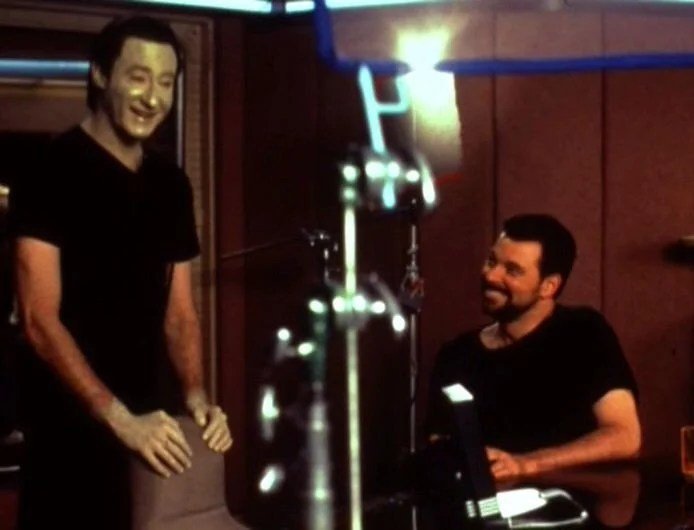
When we gaze upon the gleaming hull of the USS Enterprise-D, we see the polished product: a future of exploration, diplomacy, and occasional warp core breaches. But Star Trek: The Next Generation (TNG) wasn't beamed fully formed into our living rooms. It was painstakingly built, week after week, by a passionate crew navigating creative differences, technological hurdles, and the relentless clock. Delving Behind the Scenes of TNG Episode Production reveals a world just as rich and complex as the narratives unfolding on screen, a world where the seeds of legendary stories were sown, sometimes in ways you might never expect.
Take, for instance, the monumental Season 3 cliffhanger and Season 4 premiere, "The Best of Both Worlds." This iconic two-parter, famous for its gut-wrenching suspense and Commander Riker's agonizing order to "Fire!" on Captain Picard, was nearly a far more expansive experience. Imagine sitting down for not two, but four thrilling episodes detailing the Borg incursion – a vision that offers a fascinating look into the ambition and constraints that defined TNG's groundbreaking production.
At a Glance: Peeking Behind the Holodeck Curtain
- "The Best of Both Worlds" Almost Quadrupled: The legendary two-parter was initially pitched as a four-episode saga, offering deeper character arcs and a broader look at the Federation's struggle against the Borg.
- Creative Clash: Executive producers Michael Piller and Ronald D. Moore pushed for serialized storytelling, but Rick Berman and Gene Roddenberry prioritized episodic accessibility for syndication.
- Budget and Time Pressure: Real-world production constraints, including budget and tight filming schedules, played a significant role in condensing ambitious narratives.
- Early Behind-the-Scenes Access: "The Bionic Bunny Show" documentary, hosted by LeVar Burton, offered a rare glimpse into Season 1 production, capturing everything from bloopers to poignant cast moments.
- Impact on Future Trek: The creative tensions and production choices on TNG directly influenced the more serialized storytelling seen in Deep Space Nine and Voyager.
The Unseen Epic: "The Best of Both Worlds" as a Four-Part Saga
"The Best of Both Worlds" stands as a towering achievement in science fiction television, a testament to TNG's ability to combine high-stakes action with profound character drama. Yet, the version we know is a condensed masterpiece. Buried in 1990 production memos, showrunner Michael Piller and writer Ronald D. Moore revealed their original, grander vision: a four-episode arc designed to thoroughly explore the existential threat of the Borg and the shattering ramifications for the crew.
The Genesis of a Grand Vision
Piller and Moore saw an opportunity to "take the show into new territory," pushing the boundaries of episodic television toward something more serialized, much like the narrative arcs that redefined TV sci-fi for years to come. Their pitch was ambitious, designed to immerse viewers in a protracted conflict with the Borg, giving characters ample room to evolve under pressure. They envisioned a narrative that would not only deliver a thrilling story but also profoundly impact Picard, Riker, and the entire Federation.
A Glimpse Into the Lost Chapters
What would this four-part saga have looked like? The memos paint a vivid picture:
- Part I: The Threat Emerges
- Much like the existing Part I, this would build the tension, introduce the Borg, and culminate in Riker’s desperate order to fire on the Borg-assimilated Locutus/Picard.
- Part II: Picard Becomes Locutus
- Worf's shot would land, but the Borg cube would escape, not be destroyed immediately. Locutus would then hail the Enterprise, chillingly revealing intimate Starfleet knowledge, setting the stage for a cerebral, agonizing battle of wits between Riker and his former captain.
- Part III: The Counterattack
- The crew would launch multiple, desperate, and ultimately unsuccessful attempts to disable the Borg cube. Away teams led by Riker, Data, and Worf would undertake perilous missions. Riker would increasingly rely on Lieutenant Commander Shelby, showcasing his growth as a wartime leader. This part would culminate in the devastating defeat of Starfleet at Wolf 359, with Federation outposts falling in rapid succession.
- Part IV: Redemption and Aftermath
- A damaged Enterprise, with Riker firmly in command, would engage in an all-out Borg war. The cube would finally explode, allowing the Enterprise to escape. The final act would focus on Picard's slow, agonizing recovery, delving deep into his psychological trauma from assimilation.
The Weight of Constraints: Why It Was Condensed
This sweeping vision, however, ran head-first into the realities of television production at the time. The decision to condense the story into two parts largely came down to executive producer Rick Berman's preference for episodic storytelling. Along with series creator Gene Roddenberry, Berman was wary of serialized narratives, primarily for one key reason: syndication.
TNG was designed to be easily digestible for reruns, allowing viewers to drop in at any point without feeling lost. A multi-episode arc like the proposed four-parter would significantly challenge this accessibility. Furthermore, the Borg were an effects-heavy adversary, meaning an extended conflict would quickly balloon the budget. Budget constraints and relentless time pressures during Season 3 production were also undeniable factors in reigning in the narrative's scope. It's a common struggle in any creative endeavor: balancing boundless imagination with finite resources.
The Ripple Effect: How Condensation Shaped TNG's Future
While the condensed version meant omitting a broader Federation response, extended crew development, and Picard’s more gradual recovery, these elements weren't entirely lost. His psychological journey, for example, was beautifully explored in subsequent episodes like "Family." Riker's growth into a decisive wartime leader, while accelerated, still resonated powerfully.
Moore himself acknowledged that an extended arc would have allowed for deeper character development and truly "set the stage for more serialized storytelling in the franchise," directly influencing series like Deep Space Nine and Voyager. Even in its two-part form, "The Best of Both Worlds" delivered a legendary cliffhanger and profoundly impacted future Star Trek, demonstrating the sheer power of narrative arcs that redefined TV sci-fi.
Navigating the Creative Crucible: Showrunners and the Studio
The story of "The Best of Both Worlds" is just one poignant example of the ongoing creative crucible that defined TNG's production. Every script, every character beat, every episode's pacing was a negotiation between ambitious writers, visionary the vision of its showrunners, and the practicalities of television.
The Tug-of-War: Episodic vs. Serialized Storytelling
The tension between episodic and serialized storytelling was a constant undercurrent throughout TNG's run. While Piller and Moore pushed for deeper, longer-form arcs that would allow for character evolution and complex world-building, Roddenberry's original vision for Star Trek emphasized self-contained morality plays. This clash of philosophies wasn't just theoretical; it directly impacted how stories like the Borg invasion could be told and the level of character continuity the show could maintain. It’s a testament to the talent involved that TNG managed to strike a delicate balance, delivering standalone gems while subtly building larger character and thematic arcs.
The Craft of Writing Under Pressure
Behind every memorable line and every dramatic moment lay the demanding process of writing for TNG. The writers' room was a pressure cooker, constantly churning out new concepts, refining dialogue, and ensuring continuity within a rapidly expanding universe. Imagine pitching ideas that needed to feel fresh yet familiar, adhering to Roddenberry's future utopian ideals while still presenting compelling conflict. The weekly grind of script deadlines, combined with the need to constantly innovate, made the writer's job one of the most creatively challenging on the production.
Beyond the Script: Special Effects and Production Realities
Beyond the writing, TNG was a marvel of production design and visual effects. The show was always pushing the boundaries of television special effects, especially for a syndicated series. From the intricate model work of the Enterprise to the elaborate alien makeup and the groundbreaking use of CGI (even if sparingly in its early years), every aspect of the show required meticulous planning and execution. This meant a constant balancing act between creative ambition and the hard realities of what could be achieved on time and within budget, often leading to innovative solutions that became industry benchmarks.
First-Hand Accounts: "The Bionic Bunny Show" and On-Set Life
While many behind-the-scenes stories emerge years later through interviews and retrospectives, some insights were shared remarkably early. One of the earliest and most fascinating glimpses into TNG production came from "The Bionic Bunny Show," a "making-of" documentary broadcast on August 15, 1988. Hosted by none other than LeVar Burton (Geordi La Forge himself!), this special offered a unique perspective on the everyday magic of filming a Star Trek show.
LeVar Burton's Lens: An Early Look at TNG's Creation
Filmed during the production of the TNG Season 1 episode "Symbiosis," "The Bionic Bunny Show" provided viewers with a rare and intimate look at the nascent stages of the series. It wasn't a polished retrospective but a snapshot of the actual work in progress, showcasing the collaborative effort required to bring the Star Trek universe to life. For fans, it was like being invited onto the bridge during a normal day of operations, witnessing the meticulous process firsthand.
Candid Moments: Bloopers, Goodbyes, and Creative Choices
The documentary captured several memorable moments. It included interviews with key personnel like Robert Legato, who would go on to be a visual effects supervisor and director, offering insights into the technical challenges. Crucially, it featured the first-ever broadcast blooper reel from TNG, humanizing the cast and crew and showing that even in the 24th century, flubbed lines and missed cues were part of the creative process.
Poignantly, "Symbiosis" was the last episode filmed featuring Denise Crosby as Tasha Yar, even though "Skin of Evil" aired as her final episode due to filming order adjustments. The documentary subtly captured the end of an era for the cast, a testament to the fast-paced, often out-of-sequence nature of television production. Viewers also saw Patrick Stewart discussing a line that eventually became Data's dialogue about a malfunctioning freighter, illustrating the fluidity of script changes. Another rehearsal scene showed LaForge, Picard, Tasha, Data, and Troi discussing solar flares and "quarrelsome guests," leading to Picard's decision to visit the inhabitants of the Delos system – a small window into the collaborative dialogue that shaped each episode.
The Daily Grind: What It Meant for the Cast and Crew
"The Bionic Bunny Show" didn't just show the glamor; it hinted at the demanding daily grind. Long hours, intricate makeup, complex technical setups, and the need for consistent performances under pressure were all part of the job. It underscored that while the Enterprise-D presented a utopian future, its creation was a very human endeavor, filled with challenges and triumphs, much like any other major television production.
The Unsung Heroes: Crafting a Universe Week by Week
Beyond the writers, actors, and directors, TNG production relied on an army of unsung heroes. From the set designers who built those iconic corridors to the prop masters who created futuristic gadgets, and the costume designers who dressed the diverse Federation, every department played a crucial role in bringing the 24th century to life.
From Page to Screen: The Production Pipeline
The journey from a script on a page to a finished episode on screen was a complex pipeline. It began with conceptual art, followed by set construction, prop fabrication, costume design, and meticulous makeup tests. Then came weeks of principal photography on soundstages, often with multiple units filming simultaneously. Post-production involved editing, sound design, musical scoring, and, crucially, the integration of all those special effects shots. This multi-layered process, repeated 26 times a year, was a logistical marvel, requiring incredible coordination and dedication.
Balancing Ambition and Budget: A Constant Challenge
Every decision, from the scale of a battle sequence to the number of alien extras, was weighed against budget constraints. The producers and crew had to be constantly innovative, finding clever ways to make the most of their resources. Sometimes this meant reusing sets, repurposing props, or creating ingenious visual effects with limited technology. This spirit of creative problem-solving became a hallmark of TNG production, demonstrating how necessity often breeds invention.
The Evolving Vision
The leadership team, spearheaded by the vision of its showrunners like Michael Piller, constantly refined and evolved the show's direction. Piller, in particular, is credited with injecting more character development and emotional depth into TNG, guiding it away from some of the more abstract philosophical episodes of earlier seasons. This constant evolution, driven by feedback, critical reception, and the natural growth of the cast and crew, ensured that TNG remained fresh and compelling throughout its run.
More Than Just a Show: The Enduring Legacy of TNG Production
The stories from Behind the Scenes of TNG Episode Production reveal far more than just how a TV show was made. They highlight the incredible dedication, vision, and collaborative spirit that created a cultural phenomenon.
Setting the Standard: Impact on Future Star Trek
The lessons learned and precedents set during TNG’s production directly informed subsequent Star Trek series. The debates over serialization, the challenges of budget and effects, and the importance of strong character writing all laid the groundwork for shows like Deep Space Nine (which embraced serialization far more readily) and Voyager. TNG proved that syndicated television could achieve cinematic quality, raising the bar for an entire industry. To delve deeper into the impact of these narratives, you can Explore Star Next Generation Episodes.
The Art of the Possible: What TNG Achieved
Despite the creative tensions and practical limitations, TNG achieved remarkable feats. It presented a future that was both aspirational and deeply human, tackling complex ethical dilemmas with grace and intelligence. The show's enduring popularity is a testament not just to its on-screen narratives but to the behind-the-scenes ingenuity that brought those stories to life, proving that even with constraints, vision and talent can achieve the seemingly impossible.
Appreciating the Craft: What These Revelations Teach Us
Understanding the intricate dance between creative ambition and practical limitations changes how we view Star Trek: The Next Generation. Knowing that "The Best of Both Worlds" could have been a four-part epic, or seeing the candid moments captured by "The Bionic Bunny Show," adds layers of appreciation for the final product.
It reminds us that every episode, every decision, was a testament to the dedication of hundreds of people who believed in the vision of Star Trek. It encourages us to look beyond the finished scene and consider the countless hours of planning, writing, building, and performing that went into it. So, the next time you find yourself immersed in a TNG episode, take a moment to consider the fascinating, complex world that existed just beyond the camera's lens – a world just as compelling as the one it helped create.